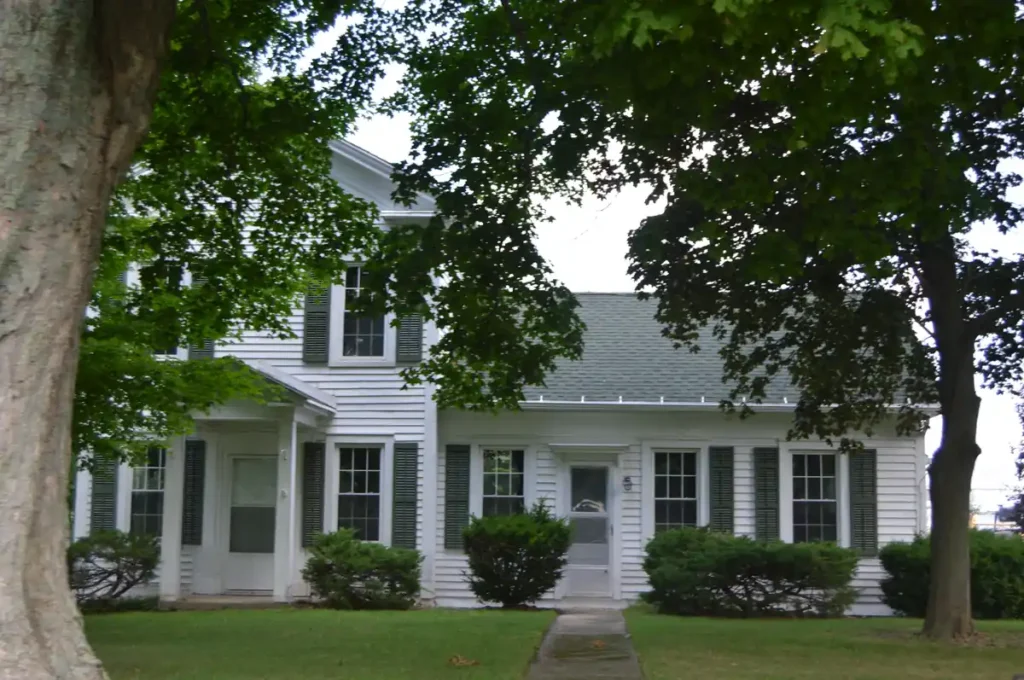
If you asked ten homeowners what homeowners insurance covers, most would hesitate after “the house.” The truth is richer—and more useful—than that: a standard HO-3 policy bundles six distinct coverages, from your dwelling to your liability at a neighborhood barbecue. Here are 7 proven facts that explain every slice, with real dollar numbers.
What does homeowners insurance cover in 2026?
The quick answer: a standard policy covers your dwelling (the house itself), other structures (garage, shed, fence), personal property (your belongings), loss of use (living costs if you cannot stay home), liability (injuries or damage you cause others), and medical payments (guests’ minor injuries). What it does not cover—floods, earthquakes, wear and tear—matters just as much, and we will get to that.
Coverage A: Your Dwelling, the Biggest Slice
Coverage A pays to repair or rebuild the house itself, and it is the foundation every other limit is calculated from. Use a $350,000 dwelling limit as our running example through this article.
The right coverage An amount is your home’s rebuild cost—labor and materials at today’s prices—not its market value. Land cannot burn down, so it needs no insurance. Before you lock in a number, run it through a home insurance calculator to see the premium your rebuild figure produces.
Tip: document your home’s exterior and lot with dated satellite and street imagery from Google Earth—free evidence of your property’s condition if you ever file a claim.
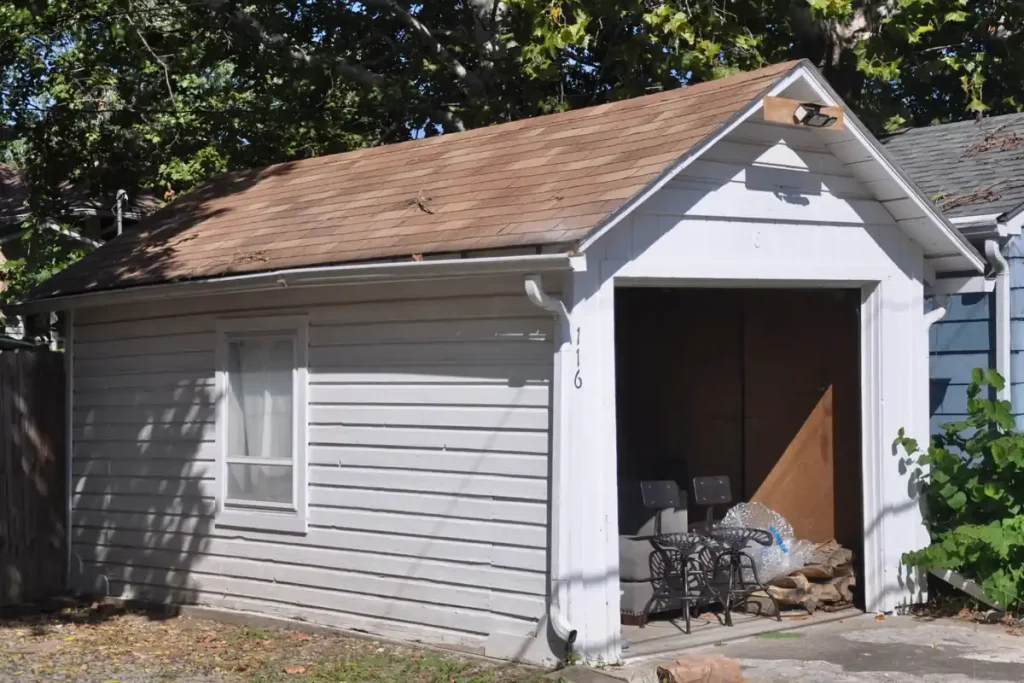
Coverage B: Other Structures at 10%
Detached structures—garage, shed, fence, guest cottage—are covered at 10% of Coverage A:
$350,000 × 10% = $35,000
That covers a typical garage and fence comfortably. If you have a detached guest house or an expensive outbuilding, check whether $35,000 is enough—if not, raise this limit specifically.
Coverage C: Personal Property at 50%
Your belongings—furniture, clothes, electronics, appliances—default to 50% of Coverage A:
$350,000 × 50% = $175,000
Two things most people miss:
- Sub-limits on valuables. Standard policies cap certain categories: jewelry often $1,500, firearms $2,500, cash $200, business equipment $2,500. Own more than that? You need a scheduled personal property rider.
- Replacement cost vs actual cash value. Some policies pay what your 5-year-old TV is worth today (depreciated); better ones pay what a new equivalent costs. Know which one you have.
Build a real home inventory—photograph every room and store the dated photos in Google Photos as a free claims record. Insurers default to 50%, but your inventory is the only number that reflects reality.
Coverage D: Loss of Use at 20%
If a covered loss makes your home uninhabitable, Coverage D pays your extra living costs—hotel, meals, laundry—typically 20% of Coverage A:
$350,000 × 20% = $70,000
How far does that stretch? At $200 a night for a hotel:
$200 × 60 nights = $12,000
Two months in a hotel barely dents the $70,000 limit. This coverage is more generous than most people realize—until they need it, when they are very glad it exists.
Coverage E and F: Liability and Medical Payments
- Coverage E (personal liability): $100,000–$500,000. If your dog bites a jogger, a guest slips on your steps, or your kid’s baseball breaks a neighbor’s window, this pays legal costs and damages. $100,000 is standard; $300,000–$500,000 is commonly recommended—and raising it often costs only $20–$50 more per year.
- Coverage F (medical payments): $1,000–$5,000. Pays guests’ minor medical bills regardless of fault—no lawsuit needed.
For serious asset protection, a personal umbrella policy extends liability to $1 million or more, typically for under $300 a year.
Open Perils vs Named Perils, Simply Explained
Here is the distinction that confuses everyone:
- Your house (Coverages A and B): open perils. Everything is covered except what the policy specifically excludes. The burden is on the insurer to point to an exclusion.
- Your stuff (Coverage C): 16 named perils. Only the listed events are covered: fire or lightning; windstorm or hail; explosion; riot or civil commotion; aircraft; vehicles; smoke; vandalism; theft; volcanic eruption; falling objects; weight of ice, snow, or sleet; accidental water discharge; sudden system tearing; freezing; and electrical current damage.
So if a meteorite hits your roof, the house is covered (not excluded). If it crushes your TV… check the list—”falling objects” is there. You are fine.
5 Exclusions That Surprise Homeowners
- Flood. The most expensive surprise. Standard policies never cover floods—you need a separate NFIP or private flood policy. One inch of water can cause $25,000+ in damage.
- Earthquake and landslide. Excluded everywhere; separate endorsement or policy required, even in California.
- Wear and tear. A 25-year-old roof that finally leaks from age is maintenance, not a covered loss. Insurers pay for sudden events, not slow decay.
- Ordinance or law (code upgrades). If new building codes require $30,000 in upgrades during your rebuild, the base policy does not pay it—unless you carry ordinance-and-law coverage.
- Sewer backup. A backed-up drain flooding your basement is excluded unless you buy the (usually cheap) sewer-backup endorsement.
A real claim example that ties it together: a kitchen fire causes $80,000 in dwelling damage, $20,000 in ruined belongings, and $6,000 in hotel costs. With a $1,000 deductible, the payout is $80,000 + $20,000 + $6,000 − $1,000 = $105,000—as long as every piece falls under a covered peril within its limit.
Is flood damage covered by homeowners insurance?
No. Standard homeowners policies exclude flood entirely. You need a separate National Flood Insurance Program (NFIP) or private flood policy.
Does homeowners insurance cover earthquakes?
No—earthquake and landslide damage are excluded from standard policies. A separate earthquake endorsement or standalone policy is required.
What are the 16 named perils in an HO-3 policy?
Fire or lightning; windstorm or hail; explosion; riot or civil commotion; aircraft; vehicles; smoke; vandalism or malicious mischief; theft; volcanic eruption; falling objects; weight of ice, snow or sleet; accidental discharge of water or steam; sudden tearing of systems; freezing; and sudden damage from electrical current.
How much personal property coverage do I need?
Start from the 50% default ($175,000 on a $350,000 dwelling), then adjust with a real home inventory. Schedule valuables like jewelry above the standard sub-limits with a separate rider.
Does homeowners insurance cover mold or pests?
Pests are never covered. Mold is covered only when caused by a covered peril—like a burst pipe—not from neglect, humidity, or slow leaks over time.
What is loss of use coverage?
It pays your extra living expenses—hotel, meals, laundry—while your home is uninhabitable after a covered loss. Typically 20% of your dwelling coverage ($70,000 on a $350,000 home).
Final Thoughts
Homeowners insurance is six coverages working as one: dwelling, other structures, belongings, living costs, liability, and medical payments—minus the exclusions that surprise people most. Walk through each with your own numbers, photograph everything you own, and read the exclusions page once. That single read is worth more than any discount.
Disclaimer: Coverage descriptions in this article are general education based on typical HO-3 policies—not policy language. Actual coverage, limits, and exclusions vary by insurer and state. Your policy document controls; confirm details with a licensed insurance agent.