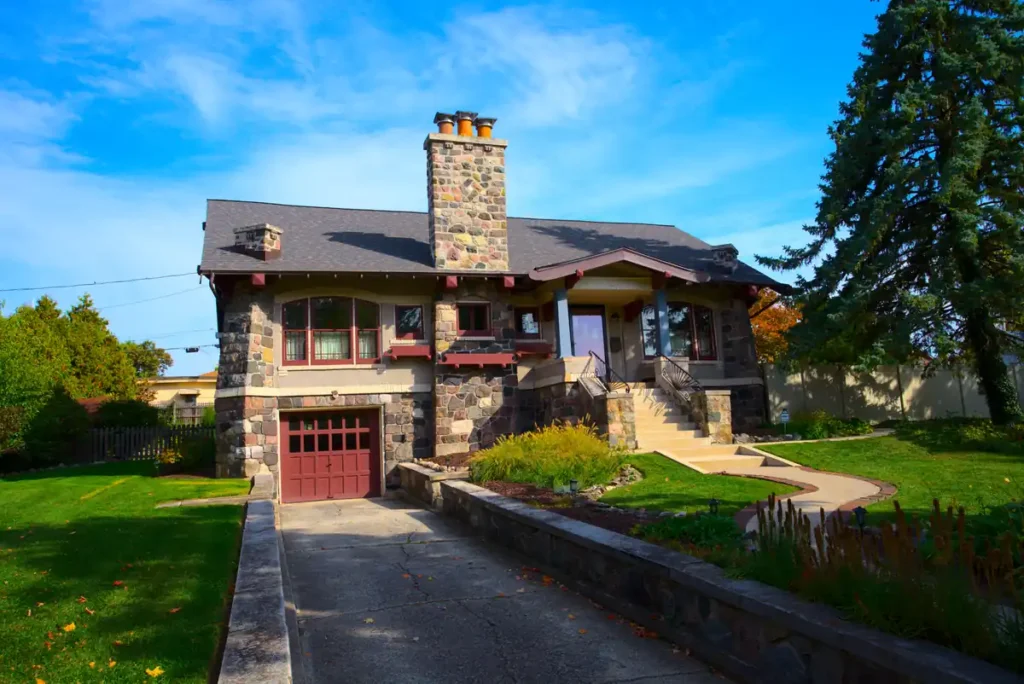
Every homeowners insurance policy is built on one number: what it would cost to rebuild your house from scratch. Get it wrong and you are either overpaying on premiums or underinsured when disaster strikes. A free home replacement cost calculator gives you a fast estimate—but the result only means something if you know how the number is built. Here are 5 proven, easy ways to estimate your home’s rebuild cost yourself.
Way 1: Start With the Basic Square-Foot Formula
Almost every rebuild estimate starts from the same simple formula:
Replacement cost = square footage × local rebuild cost per square foot
Take a 2,000-square-foot home in an area where builders charge $175 per square foot:
2,000 × $175 = $350,000
That is your starting point. Everything below refines it—because $175 per square foot is only right if your home is truly a mid-range build in an average-cost region.
Way 2: Pick Your Construction Grade
Not all square feet cost the same. A basic ranch and a custom luxury home can differ by 3–4x per square foot. Here is what 2,000 square feet costs at each grade (2026 ranges):
| Construction grade | Cost per sq ft | 2,000 sq ft total |
|---|---|---|
| Basic / Economy | $125 | $250,000 |
| Mid-range | $175 | $350,000 |
| Custom | $300 | $600,000 |
| Luxury | $450 | $900,000 |
Be honest about your grade—finishes, roofing, flooring, and fixtures drive this more than the floor plan. A reality check: the NAHB’s 2024 Construction Cost Survey puts the average construction cost at $162 per square foot (construction only, no land). For 2,000 square feet, that is $324,000, plus roughly 20% contractor markup = $388,800. If your DIY number lands far from that, recheck your grade.
Way 3: Adjust for Your Region
Labor and materials cost far more on the West Coast than in the Midwest. Apply a regional multiplier to your grade-based number:
| Region | Multiplier | $350,000 becomes |
|---|---|---|
| West Coast & New England | 1.20–1.25× | $420,000–$437,500 |
| Mountain West | 1.05× | $367,500 |
| Midwest & Southeast | 0.95× | $332,500 |
The same mid-range 2,000 sq ft home: $420,000 on the West Coast vs $332,500 in the Midwest—an $87,500 swing from geography alone. To pin down your local per-square-foot figure, look up local builders and contractors on Google Maps and ask for their current rebuild rate—a five-minute call beats any national average.
Way 4: Add What the Formula Misses
The square-foot formula covers the structure. Real rebuilds have line items they forget:
- Debris removal and demolition: add about 15% on top of the structure cost. $350,000 × 1.15 = $402,500.
- Permits and fees: often several thousand dollars, highly local.
- Code upgrades: if your home predates current building codes, rebuilding legally can cost significantly more—ask about ordinance-and-law coverage.
- Basement: an unfinished-to-finished basement adds roughly $50–$100 per square foot (a 1,000 sq ft basement at $75 = $75,000).
- Multi-story and garage: about +8% for multi-story; roughly +$12,000 per garage stall.
Build a free line-item worksheet in Google Sheets—one row per item above—so nothing gets forgotten. The formula gives you the headline; the worksheet gives you the truth.
Way 5: Run It Through a home replacement cost calculator
Now combine everything. A home insurance calculator takes your rebuild number and turns it into the premium that number produces:
- Enter your dwelling coverage—the refined rebuild cost from Ways 1–4.
- Set your rate and deductible—start with typical figures, then adjust.
- Read the output—annual and monthly premium estimates plus the standard coverage add-ons.
This closes the loop: rebuild cost in, insurance cost out. Use it to test scenarios—”what if construction costs rise 10%?”—before you talk to an agent.
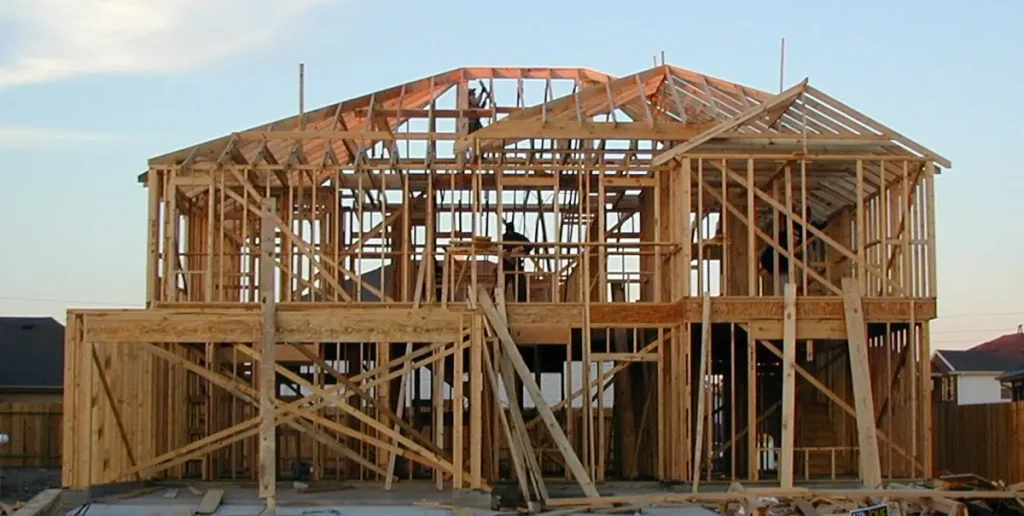
What Replacement Cost Includes (and What It Doesn’t)
Included: labor and materials to rebuild the structure with similar quality, debris removal (if you added it), and typically attached structures.
Not included: the land (it cannot burn down), and usually not code-upgrade costs unless you carry ordinance-and-law coverage. Detached structures like sheds and fences often sit under a separate, smaller limit—check yours.
Extended vs Guaranteed Replacement Cost
Standard policies cap payouts at your dwelling limit. Two endorsements remove that ceiling:
- Extended replacement cost: pays 125% or 150% of your limit. On $350,000, that is $437,500 or $525,000—a cushion against cost spikes after a disaster.
- Guaranteed replacement cost: pays the full rebuild, whatever it costs. Rare, and the most expensive option.
After a regional disaster, when every contractor is booked and materials spike, that cushion is the difference between rebuilding and coming up short.
When to Pay for a Pro Appraisal
DIY math gets you 90% of the way. Pay for a professional replacement-cost appraisal ($314–$425 on average, per Angi) when your home is custom or historic, you have major additions the formula undervalues, or your insurer’s estimate and yours disagree by a wide margin. Insurers also run their own replacement-cost estimator software—if their number looks low, an independent appraisal is your leverage.
What is the home replacement cost?
The cost to rebuild your home with similar materials at today’s prices—labor plus materials, excluding the land.
How do you calculate replacement cost per square foot?
Multiply your home’s square footage by the local rebuild cost per square foot for your construction grade, then adjust for region and add missed items (debris removal, permits, basement). Example: 2,000 sq ft × $175 = $350,000 before adjustments.
Is replacement cost the same as market value?
No. Market value includes the land and reflects local demand; replacement cost is labor and materials only. A $450,000 market-value home on a $100,000 lot has roughly a $350,000 replacement cost.
What does replacement cost not include?
The land and typically code-upgrade costs unless you carry ordinance-and-law coverage. Detached structures may fall under a separate, smaller limit.
What is the extended vs. guaranteed replacement cost?
Extended replacement cost adds a 125–150% cushion above your dwelling limit ($350,000 → $437,500 or $525,000). Guaranteed replacement cost pays the full rebuild amount no matter the cost.
How often should I update my replacement cost estimate?
At every renewal, and after any renovation or addition. Construction costs move fast—an estimate from three years ago is already stale.
Final Thoughts
Estimating rebuild cost is square footage times grade-adjusted dollars, tuned for your region and topped up with the line items formulas, forget. Run the five ways above, cross-check against the NAHB benchmark, and you will know—before any agent tells you—whether your coverage number is honest.
Disclaimer: Figures in this article are estimates for education and budgeting only—not quotes or appraisals. Rebuild costs vary by market, contractor, and home. Confirm your dwelling coverage with a licensed insurance agent or appraiser.